
Keynote Speakers
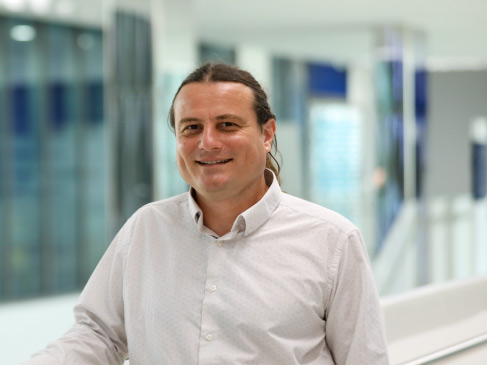
Preslav Nakov
Department Chair and Professor of Natural Language Processing at Mohamed bin Zayed University of Artificial Intelligence
Research Interests
Professor Nakov’s research interests include computational linguistics and natural language processing, disinformation, propaganda, fake news and media bias detection, fact checking, machine translation, question answering, sentiment analysis, lexical semantics, and biomedical text processing.
Contact: preslav.nakov@mbzuai.ac.ae
Factuality Challenges in the Era of Large Language Models
We will discuss the risks, the challenges, and the opportunities that Large Language Models (LLMs) bring regarding factuality. We will then present some recent work on using LLMs for fact-checking, on detecting machine-generated text, and on fighting the ongoing misinformation pollution with LLMs. Finally, we will present a number of LLM fact-checking tools recently developed at MBZUAI: (i) LM-Polygraph, a tool to predict an LLM’s uncertainty in its output using cheap and fast uncertainty quantification techniques, (ii) Factcheck-Bench, a fine-grained evaluation benchmark and framework for fact-checking the output of LLMs, (iii) Loki, an open-source tool for fact-checking the output of LLMs, developed based on Factcheck-Bench and optimized for speed and quality, (iv) OpenFactCheck, a framework for fact-checking LLM output, for building customized fact-checking systems, and for benchmarking LLMs for factuality, (v) LLM-DetectAIve, a tool for machine-generated text detection, and (vi) FRAPPE, a FRAming, Persuasion, and Propaganda Explorer.
Preslav Nakov is Professor and Department Chair for NLP at the Mohamed bin Zayed University of Artificial Intelligence. He is part of the core team at MBZUAI’s Institute for Foundation Models that developed Jais, the world’s best open-source Arabic-centric LLM, Nanda, the world’s best open-weights Hindi model, and Sherkala, the world’s best open-weights Kazakh model. Previously, he was Principal Scientist at the Qatar Computing Research Institute, HBKU, where he led the Tanbih mega-project, developed in collaboration with MIT, which aims to limit the impact of «fake news», propaganda and media bias by making users aware of what they are reading, thus promoting media literacy and critical thinking. He received his PhD degree in Computer Science from the University of California at Berkeley, supported by a Fulbright grant. He is Chair of the European Chapter of the Association for Computational Linguistics (EACL), Secretary of ACL SIGSLAV, and Secretary of the Truth and Trust Online board of trustees. Formerly, he was PC chair of ACL 2022, and President of ACL SIGLEX. He is also member of the editorial board of several journals including Computational Linguistics, TACL, ACM TOIS, IEEE TASL, IEEE TAC, CS&L, NLE, AI Communications, and Frontiers in AI. He authored a Morgan & Claypool book on Semantic Relations between Nominals, two books on computer algorithms, and 250+ research papers. He received a Best Paper Award at ACM WebSci’2022, a Best Long Paper Award at CIKM’2020, a Best Resource Paper Award at EACL’2024, a Best Demo Paper Award (Honorable Mention) at ACL’2020, a Best Task Paper Award (Honorable Mention) at SemEval’2020, a Best Poster Award at SocInfo’2019, and the Young Researcher Award at RANLP’2011. He was also the first to receive the Bulgarian President’s John Atanasoff award, named after the inventor of the first automatic electronic digital computer. His research was featured by over 100 news outlets, including Reuters, Forbes, Financial Times, CNN, Boston Globe, Aljazeera, DefenseOne, Business Insider, MIT Technology Review, Science Daily, Popular Science, Fast Company, The Register, WIRED, and Engadget, among others.
Google scholar: https://scholar.google.com/citations?user=DfXsKZ4AAAAJ
ResearchGate: https://www.researchgate.net/profile/Preslav-Nakov
Scopus: https://www.scopus.com/authid/detail.uri?authorId=15043153900
Information taken: https://mbzuai.ac.ae/study/faculty/preslav-nakov/
Salima Lamsiyah
NLP-Machine Learning Researcher, Luxembourg University
Research Interests
Salima Lamsiyah, is a NLP-Machine Learning Researcher at Luxemburg University. Her research interests include Automatic Text Summarization, Deep Learning Models, Transfer Learning, and Natural Language Processing.

From General LLMs to Cyber-Native Language Models: Specialization, Robustness, and Trust in Cybersecurity AI
Recent advances in Large Language Models (LLMs) have created new opportunities for cybersecurity applications, ranging from phishing and malicious URL detection to cyber threat intelligence analysis. However, cybersecurity data differs significantly from natural language, as it often contains highly structured, adversarial, and rapidly evolving patterns that are not always well captured by general-purpose LLMs. This talk explores the transition from generic LLMs toward cyber-native language models designed for cybersecurity tasks. Drawing on recent work on domain-specific transformer models for malicious domain and URL detection, it highlights the importance of specialized pretraining, cybersecurity-aware tokenization, and domain-adaptive representation learning. The talk also discusses emerging challenges related to robustness, interpretability, safe adaptation, and trustworthy deployment in real-world cybersecurity systems.
Saad Ezzini
Assistant Professor in the ICS Department and the Interdisciplinary Research Center for Intelligent Manufacturing and Robotics at King Fahd University of Petroleum and Minerals (KFUPM)
Research Interests
Dr. Ezzini’s research lies at the intersection of Artificial Intelligence, Software Engineering, and Natural Language Processing. His work pioneers the use of Large Language Models and Agentic AI frameworks to solve high-impact challenges, ranging from ambiguity resolution in requirements engineering and autonomous code review, to Text-to-SQL generation and embodied assistive robotics

The Double-Edged Prompt: Securing LLM-Generated Code and Defending Against the New Social Engineering
We will discuss the hidden security risks that come with relying on artificial intelligence to write code and search databases. As AI tools take on a bigger role in building software, the way people talk to these systems has become a modern form of social engineering. Instead of using traditional hacking methods, attackers are using clever wording, roleplay, and manipulation to trick the AI into writing harmful programs or handing over sensitive data. Through interactive demonstrations, we will break down how completely innocent-sounding requests can cause massive security failures. We will then share practical steps you can take to defend your projects and build secure systems that let you use AI safely without blindly trusting its output.
Dr. Saad Ezzini is an Assistant Professor in the ICS Department and the Interdisciplinary Research Center for Intelligent Manufacturing and Robotics at King Fahd University of Petroleum and Minerals (KFUPM). He received his Ph.D. in Software Engineering from the University of Luxembourg in 2022. Prior to joining KFUPM, he served as an Assistant Professor at Lancaster University, UK.
Dr. Ezzini’s research lies at the intersection of Artificial Intelligence, Software Engineering, and Natural Language Processing. His work pioneers the use of Large Language Models and Agentic AI frameworks to solve high-impact challenges, ranging from ambiguity resolution in requirements engineering and autonomous code review, to Text-to-SQL generation and embodied assistive robotics.
He has authored numerous publications in premier software engineering and NLP venues, including ICSE, ASE, ACL, and EMNLP, and is a recipient of the Young Scientist Research Excellence Award. An active leader in the academic community, Dr. Ezzini frequently serves on the program committees for top-tier conferences and has extensively been involved in organizing international workshops and conferences (such as ASE’23, RANLP’25, WACL-4&Abjad-1@COLING’25, OSACT-7@LREC’26, and AbjadNLP-2@EACL’26). He also serves as an Associate Editor for Natural Language Processing Journal (Cambridge University Press) and on the Advisory Board of the John Benjamins NLP book series.
Google scholar: https://scholar.google.com/citations?user=48ebm6wAAAAJ&hl=en
GitHub: https://ezzini.github.io/
LinkedIn: https://sa.linkedin.com/in/ezzini
ResearchGate: https://www.researchgate.net/profile/Saad-Ezzini
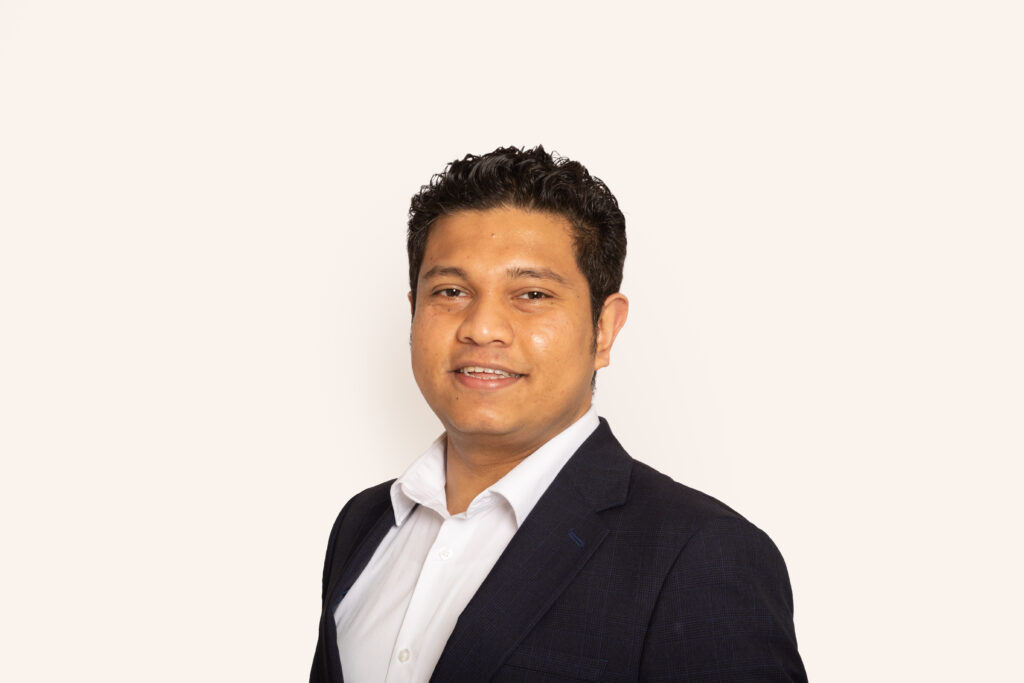
Tharindu Ranasinghe
Lecturer in Security and Protection Science School of Computing and Communications | Lancaster University
Research Interests
My research focuses on developing Machine Learning (ML) approaches for Natural Language Processing (NLP) tasks, particularly emphasising NLP for Social Good. My work has various applications, such as computational social science, digital humanities and text adaptation. I have published in top natural language processing journals and conferences, including ACL, EMNLP, NAACL, and COLING. I am an Associate Editor of Natural Language Processing (previously Journal of Natural Language Engineering) and as an Area Chair for ACL, NAACL, EMNLP, and EACL. Additionally, I co-chair the New Trends in Translation and Technology (NeTTT) conference series (https://nettt-conference.com/) and the LoResLM workshop (https://loreslm.github.io/).
Perspective-Based Approaches to Detecting Online Abuse
For over a decade, hate speech detection has been framed as a supervised classification problem with a single correct answer. We collect annotations from multiple people, aggregate them through majority voting, and train models to reproduce that consensus. But hate speech is not a property that exists independently of who is reading it. Whether an utterance is experienced as hateful depends on the annotator’s identity, lived experience, cultural context, and the language in which it is expressed, and the disagreement this produces is not noise to be averaged away, but a signal to be modelled. In this talk, I argue that the majority-vote paradigm systematically silences minority and marginalised perspectives, precisely the perspectives that hate speech detection is meant to protect. Drawing on the emerging agenda of data perspectivism and learning with disagreement, I will examine how preserving annotator-level labels reshapes everything from dataset construction and evaluation to model design and deployment. I will close by outlining open challenges, disentangling legitimate disagreement from annotation error, scaling perspectivist methods, and reporting performance honestly when there is no single ground truth.